
Works / WirelessCar
/ The brief
WirelessCar started in Gothenburg in 1999 as a joint venture between Ericsson, Volvo and Telia. It builds the software layer that sits between a vehicle and everything a manufacturer wants to do with it, from a door left open in Beijing to a fleet charging schedule.
None of that is visible. There is no showroom, no shelf, nothing to shoot. The people who buy it are a small, technical group inside car manufacturers, and they are not looking to be convinced of an idea. They are checking whether this company can carry their programme.
So the site is not a brochure. It is a reference document that happens to be well set.
/ The interface
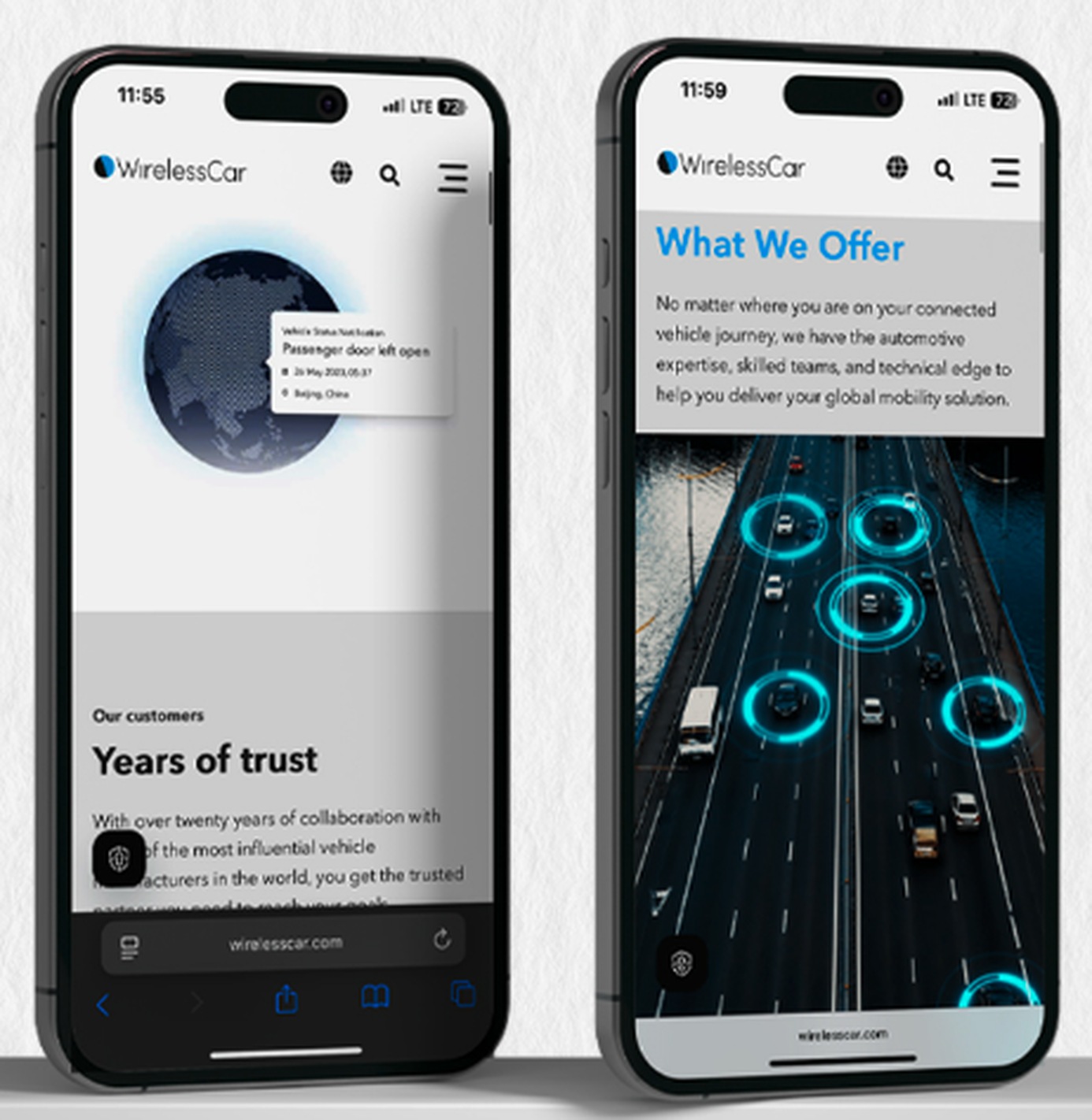
The header carries three things. A globe, a search field, a menu.
WirelessCar sells in more than a hundred markets, so language is not a footer link, it comes first. Search is next, because a returning visitor usually knows the name of the service they came for. Everything else folds away.
The design language stays quiet. Generous white, one accent blue, type doing most of the work, imagery used only where it explains something. Nothing moves for its own sake. On a phone the whole page reads at scroll speed, which is where a good share of this traffic actually happens, between meetings.
/ The structure
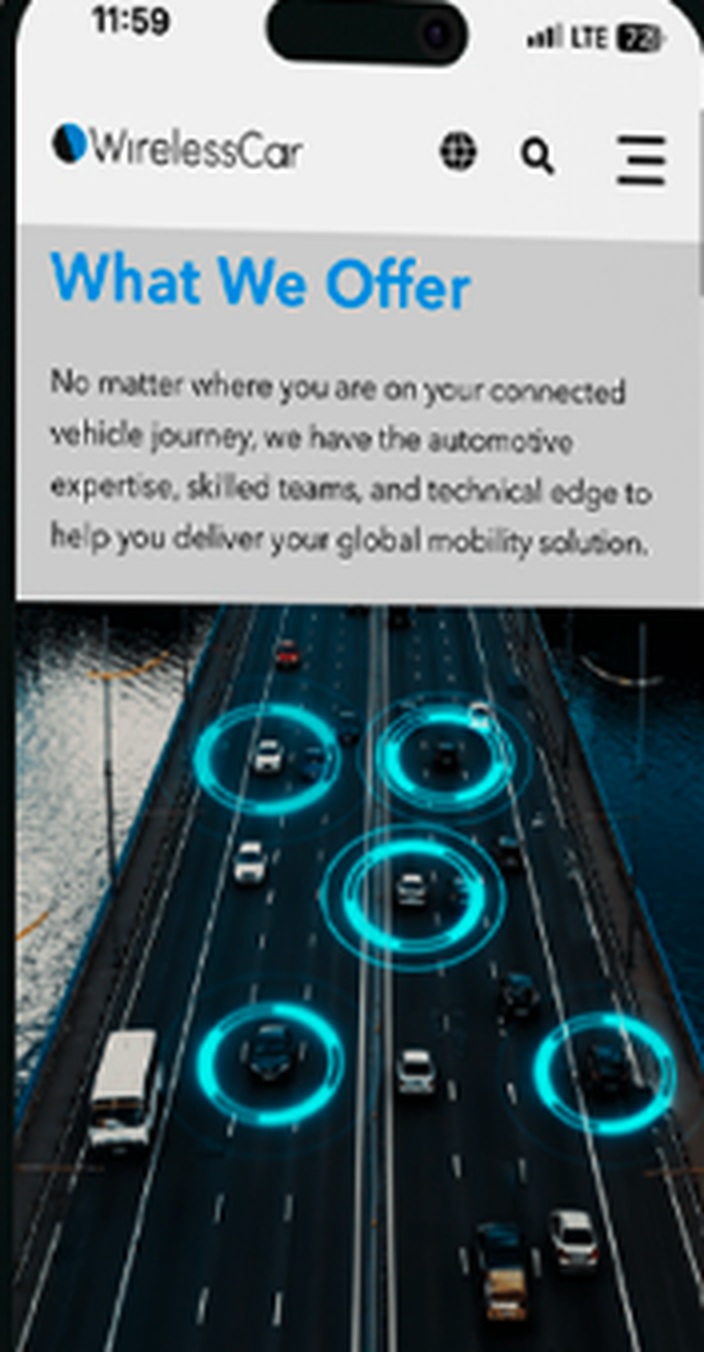
The offer is split so a manufacturer can enter at their own point. Vehicle data, telematics, security, fleet operations and EV services each hold their own section instead of collapsing into one page called Solutions.
That mirrors how the company actually sells. Some customers take a complete package, others take a single service. The navigation should not force them to pretend otherwise.
/ Architecture and proof
The API story is told in the open rather than parked behind a contact form. Integration and the cloud layer underneath are described in enough detail for a technical reader to judge them, because that reader is the one who decides.
Proof does the rest. OEM collaborations, real deployment scenarios and case studies sit next to the claims they support. The customers section leads with time rather than logos, which is the more honest measure in an industry where a programme runs for a decade.
Underneath it all, a stream of plain articles on vehicle data, mobility and innovation keeps the site alive between product releases.
/ The outcome
UI/UX, website and mobile application work produced by Pine-up. Brand mark and photography belong to the client.